Understanding Separation Anxiety in Toddlers
Last updated:
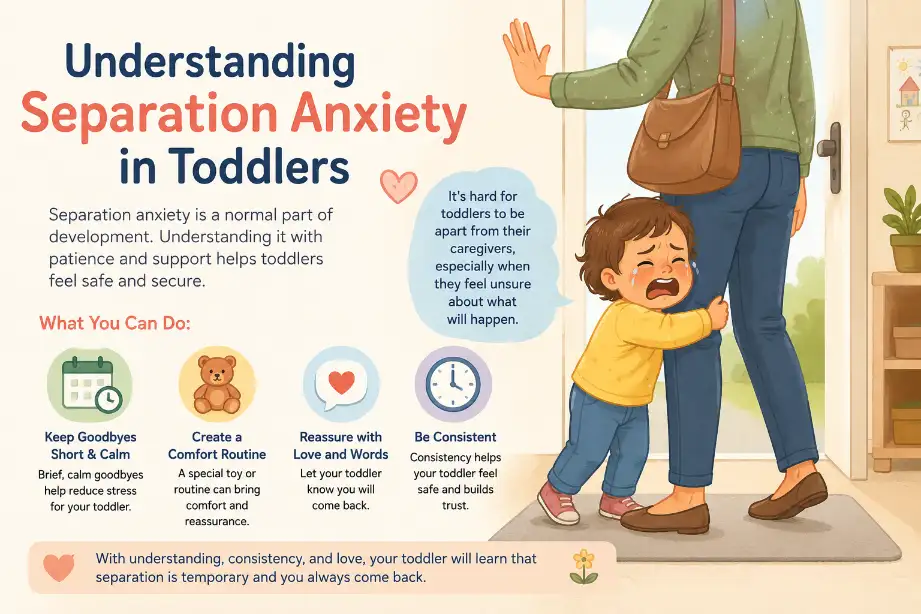
Many parents feel worried when their toddler cries, clings, or becomes upset whenever they leave the room. These emotional reactions often point to separation anxiety, a normal stage in early childhood development. Toddlers build strong emotional bonds with their parents and caregivers, which makes temporary separation feel stressful and confusing. A child may cry at daycare, resist staying with relatives, or become distressed when a parent leaves for work.
While these behaviors can feel challenging, they usually show that a child has formed healthy attachments. Parents who understand the reasons behind separation anxiety can respond with patience and confidence. With the right support and consistent routines, toddlers gradually learn that separations are temporary and that their caregivers will return.
Keep in mind: Distress around separation is common in early childhood, but its timing and intensity vary with temperament, experience, disability, neurodivergence, culture, and family circumstances.
Understanding this developmental stage helps families create a calmer and more secure environment for young children.
Separation feelings vary across families
Separation anxiety in toddlers refers to the fear or distress a child experiences when separated from a parent or primary caregiver. Most toddlers experience this stage between 8 months and 3 years of age. The intensity and duration vary from one child to another.
A toddler often struggles to understand time and distance. When a parent leaves, the child may believe that the parent will not return. This fear triggers emotional reactions such as crying, tantrums, clinginess, and resistance to being left with others.
Common Signs of Separation Anxiety
Parents can identify separation anxiety through several behaviors, including:
- Crying when a parent leaves
- Clinging to caregivers in unfamiliar situations
- Refusing to attend daycare or preschool
- Fear of being alone
- Difficulty sleeping without a parent nearby
- Frequent tantrums during separation
- Excessive worry when caregivers are out of sight
These signs often appear during major changes, such as moving to a new home, starting daycare, or welcoming a new sibling.
Why Separation Anxiety Happens
Several developmental factors contribute to separation anxiety.
Strong Emotional Attachment
Toddlers develop deep emotional connections with their caregivers. These attachments create a sense of safety and comfort.
Growing Awareness
As children grow, they begin to understand that people and objects exist even when they cannot see them. This awareness can increase anxiety because toddlers realize that their parents are somewhere else.
Fear of Unfamiliar Situations
New places, people, and routines can make toddlers feel uncertain. They often seek reassurance from familiar caregivers during these experiences.
Changes in Routine
Children thrive on predictability. Changes in daily schedules can increase feelings of insecurity and trigger separation anxiety.
Effective Solutions for Managing Separation Anxiety
Parents can help toddlers cope with separation anxiety through practical and supportive strategies.
Create Consistent Goodbye Routines
A predictable farewell routine helps children know what to expect.
Examples include:
- Give a hug.
- Say a short goodbye phrase.
- Leave calmly and confidently.
Avoid extending goodbyes because prolonged departures often increase anxiety.
Practice Short Separations
Gradual exposure helps toddlers build confidence.
You can:
- Leave the room for a few minutes.
- Allow trusted family members to supervise the child.
- Increase separation time slowly.
These small experiences help children learn the family’s goodbye-and-return pattern.
Build Trust Through Consistency
Children feel secure when parents follow through on promises. If you tell your toddler that you will return after lunch, make every effort to keep that promise.
Encourage Independence
Give toddlers opportunities to complete simple tasks on their own.
Examples include:
- Choosing clothes
- Putting away toys
- Carrying small items
Small achievements help children develop confidence and self-reliance.
Stay Calm During Departures
Toddlers often mirror their parents’ emotions. A calm attitude communicates safety and reassurance.
Try to:
- Speak in a relaxed tone
- Smile during goodbyes
- Avoid showing guilt or anxiety
Use Comfort Objects
Many toddlers find comfort in familiar items such as:
- Favorite stuffed animals
- Blankets
- Family photos
These objects provide emotional support during separation.
How Separation Anxiety Affects Daily Life
Separation anxiety can influence several aspects of a toddler’s routine.
Daycare and Preschool Challenges
Many toddlers struggle when starting daycare or preschool. They may cry at drop-off or resist entering the classroom.
Parents can ease this transition by:
- Visiting the facility before the first day
- Meeting teachers in advance
- Maintaining a regular schedule
Sleep Difficulties
Some toddlers experience bedtime anxiety because they associate sleep with separation.
Helpful approaches include:
- Following a consistent bedtime routine
- Reading calming stories
- Providing a comfort object
Social Development
Separation anxiety can affect social interactions. Some toddlers avoid group activities or remain close to parents during gatherings.
Gentle encouragement and repeated positive experiences often improve social confidence over time.
Factors That Can Increase Separation Anxiety
Certain circumstances can intensify a toddler’s anxiety.
Family Changes
Major life events can create emotional stress.
Examples include:
- Divorce
- Moving to a new home
- Birth of a sibling
- Changes in childcare arrangements
Illness or Hospitalization
A child who experiences illness may become more dependent on caregivers and fear separation afterward.
Stress Within the Home
Children often sense tension around them. Family stress can affect a toddler’s sense of security and increase anxious behaviors.
Temperament Differences
Some children naturally feel more cautious or sensitive. These toddlers may need additional support when adjusting to new situations.
When Parents Should Seek Professional Help
Separation anxiety forms a normal part of childhood development. Still, some situations require professional attention.
Consider speaking with a pediatrician or child psychologist if:
- Anxiety continues beyond the expected developmental stage
- The child experiences extreme panic during separations
- Daily activities become difficult
- Sleep problems become severe
- Physical symptoms such as stomachaches occur frequently
Early guidance can help families address concerns before they affect long-term development.
Building Emotional Security in Toddlers
Parents play a major role in helping toddlers feel secure.
The following habits support emotional well-being:
- Maintain predictable routines
- Offer praise for brave behavior
- Listen to children’s feelings
- Provide reassurance without overprotecting
- Encourage healthy social experiences
Children who receive consistent support gradually learn to manage temporary separations with greater confidence.
Conclusion
Understanding separation anxiety in toddlers helps parents respond with patience and confidence during a challenging developmental stage. Most toddlers experience some level of anxiety when separated from trusted caregivers, and these feelings usually decrease as children mature. Consistent routines, calm departures, gradual practice, and emotional support help children build trust and independence. Parents should remember that separation anxiety often reflects a strong attachment rather than a problem. By creating a secure environment and encouraging coping skills, families can help toddlers adjust to separations more comfortably. With time, reassurance, and positive experiences, children gain confidence and learn what to expect from familiar goodbye-and-return routines.
F.A.Q
What is separation anxiety in toddlers?
Separation anxiety is a child’s fear or distress when separated from a parent or primary caregiver.
At what age does separation anxiety usually begin?
Most children show signs between 8 months and 3 years of age.
How long does separation anxiety last?
The duration varies, though many children improve as they grow and gain confidence.
Is separation anxiety a normal part of development?
Yes, it commonly occurs during early childhood and reflects healthy attachment.
Can daycare make separation anxiety worse?
A new daycare environment can temporarily increase anxiety until the child adjusts.
Should parents sneak away to avoid tears?
No, honest and consistent goodbyes help children build trust and security.
When should parents seek professional help?
Parents should seek help if anxiety becomes severe or disrupts daily life for an extended period.
When to get more help
Ask a pediatric healthcare professional or qualified mental-health professional for guidance when distress is severe, persists for weeks without easing, prevents ordinary activities, or causes substantial family concern.
Related reading
Sources
- NHS — Separation Anxiety (consulted August 28, 2026).
- CDC — Positive Parenting Tips: Toddlers (2–3 years) (consulted August 28, 2026).
- CDC — Tips for Noticing and Naming Emotions (consulted August 28, 2026).
Source note: These links support the developmental, safety, nutrition, sleep, or parenting guidance in this article. They do not replace individualized professional care.