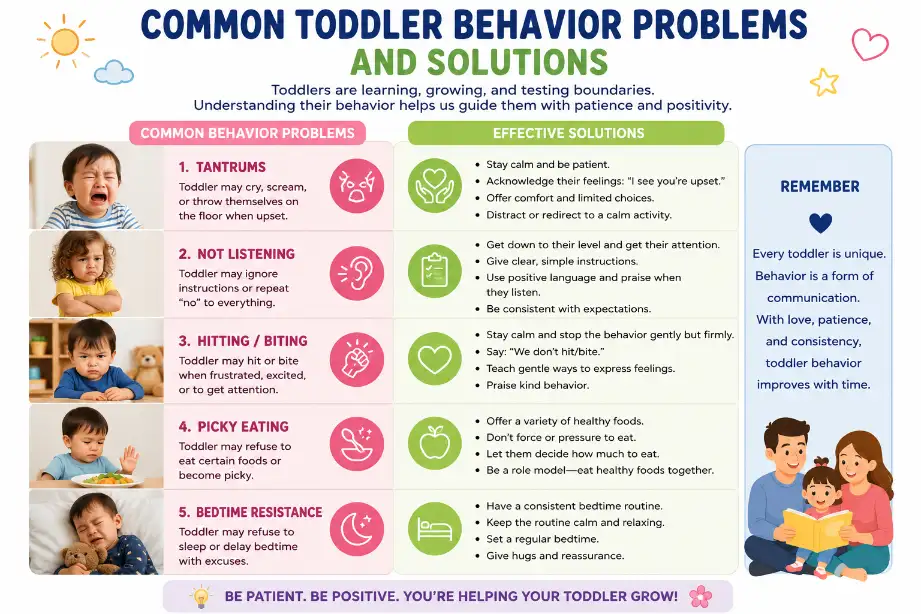
Common Toddler Behavior Challenges and Supportive Responses
Last updated:
Toddlers bring joy, curiosity, and endless energy into a family. At the same time, they test limits, express strong emotions, and react in ways that leave many parents confused. A child between the ages of one and three experiences rapid physical, emotional, and mental growth. During this stage, toddlers try to understand their surroundings and develop independence. Since they still lack communication and self-control skills, behavior problems often appear. Tantrums, biting, stubbornness, and refusal to listen can become daily challenges.
Parents often wonder whether these actions signal normal development or a bigger issue. The good news is that most toddler behavior problems come from natural growth stages. With patience, consistency, and the right approach, parents can guide their children toward better behavior while building a strong and trusting relationship.
Keep in mind: Behaviors such as refusal, yelling, throwing, or grabbing are signals to understand, not proof that a toddler is bad, manipulative, or intentionally difficult.
Describe the behavior without labeling the child
Every toddler behaves differently, but several behavior issues appear frequently during early childhood. Understanding the reasons behind these actions helps parents respond effectively.
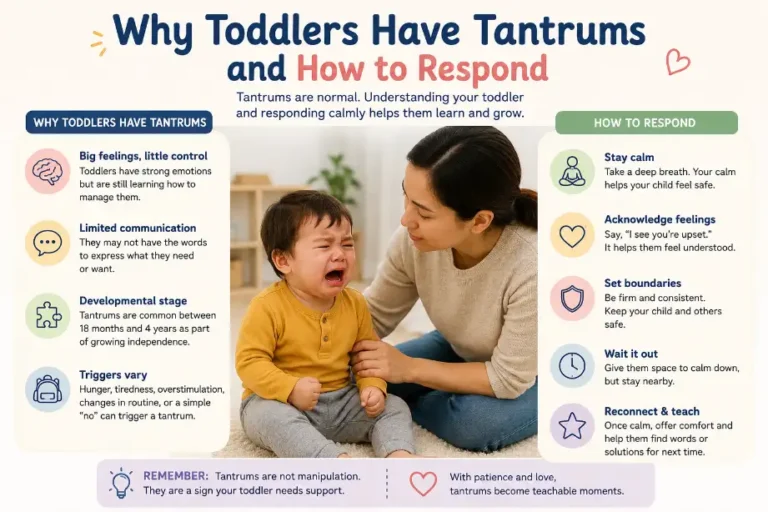
Temper Tantrums
Temper tantrums rank among the most common toddler behavior problems. A toddler may scream, cry, kick, or throw objects when something does not go their way.
Causes of Temper Tantrums
- Frustration due to limited communication skills
- Hunger, tiredness, or overstimulation
- Desire for independence
- Difficulty managing emotions
Solutions for Temper Tantrums
- Stay calm during the episode.
- Speak in a gentle and firm tone.
- Remove dangerous objects from the area.
- Acknowledge your child’s feelings.
- Teach simple words to express emotions.
- Maintain regular sleep and meal schedules.
Refusing to Listen
Many toddlers ignore instructions even when they understand them. This behavior often frustrates parents.
Causes of Refusing to Listen
- Desire to test boundaries
- Interest in another activity
- Lack of understanding
- Search for attention
Solutions for Refusing to Listen
- Give clear and simple instructions.
- Make eye contact before speaking.
- Offer limited choices.
- Praise cooperation immediately.
- Avoid shouting or repeating commands excessively.
Biting
Some toddlers bite siblings, friends, or caregivers. This behavior often appears during emotional or social challenges.
Causes of Biting
- Teething discomfort
- Frustration
- Excitement
- Lack of verbal skills
Solutions for Biting
- Interrupt the behavior promptly and calmly.
- Explain that biting hurts others.
- Encourage words instead of actions.
- Observe situations that trigger biting.
- Provide teething toys if needed.
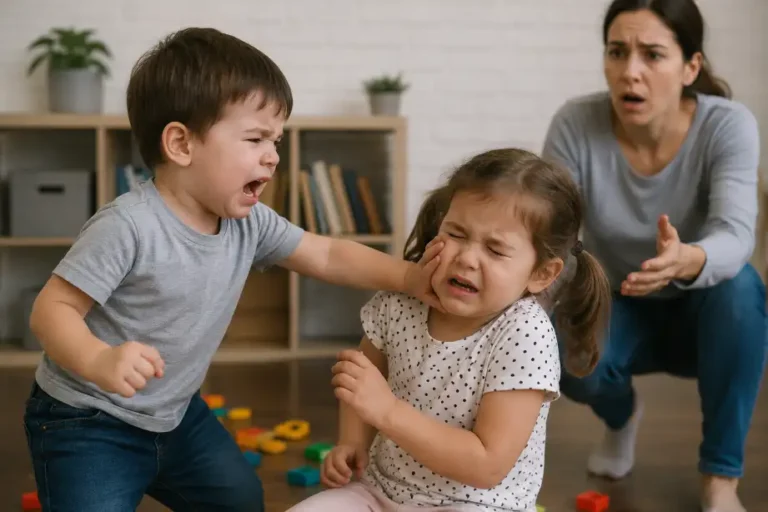
Aggressive Behavior
Toddlers may hit, kick, push, or throw objects when upset.
Causes of Aggression
- Strong emotions
- Poor impulse control
- Copying behavior from others
- Difficulty sharing
Solutions for Aggression
- Teach gentle ways to interact.
- Show calm behavior as an example.
- Praise positive actions.
- Redirect attention to another activity.
- Set clear consequences for aggressive actions.
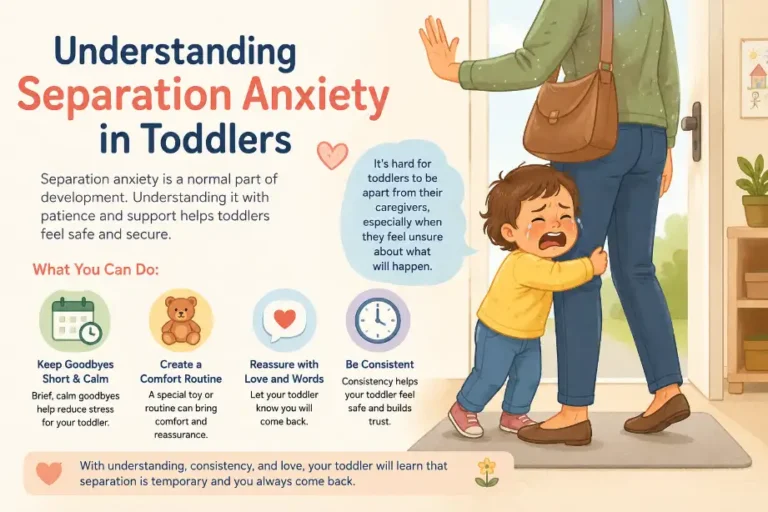
Separation Anxiety
Many toddlers become upset when parents leave them with relatives, babysitters, or daycare providers.
Causes of Separation Anxiety
- Strong attachment to parents
- Fear of unfamiliar situations
- Changes in routine
Solutions for Separation Anxiety
- Create a predictable goodbye routine.
- Keep departures short and calm.
- Reassure your child before leaving.
- Build trust through consistent routines.
Why Toddlers Display Challenging Behaviors
Toddler behavior often reflects developmental growth rather than intentional misbehavior. Children at this age experience emotions intensely but lack the skills to manage them.
Several factors influence toddler behavior:
- Physical development
- Emotional growth
- Communication limitations
- Environmental changes
- Family routines
- Sleep quality
- Nutrition habits
Parents who understand these influences often respond with greater patience and confidence.
The Role of Brain Development
A toddler’s brain develops rapidly. Areas responsible for decision-making and emotional control still need time to mature. As a result, toddlers react quickly to frustration and excitement. They often act before thinking.
Parents can support healthy development by:
- Reading daily
- Encouraging play
- Offering emotional support
- Maintaining routines
- Providing opportunities for social interaction
Effective Discipline Strategies for Toddlers
Discipline teaches children appropriate behavior. It differs from punishment because it focuses on learning rather than fear.
Set Clear Rules
Toddlers need simple rules they can understand.
Examples include:
- Use gentle hands.
- Pick up toys after play.
- Sit during meals.
- Use kind words.
Consistency helps children learn expectations faster.
Use Positive Reinforcement
Children often repeat behaviors that receive positive attention.
Ways to encourage good behavior include:
- Verbal praise
- Hugs
- High-fives
- Sticker charts
- Special activities
Positive reinforcement creates motivation and builds confidence.
Redirect Unwanted Behavior
Redirection works well because toddlers have short attention spans.
For example:
- Redirect throwing toys to throwing soft balls outdoors.
- Redirect drawing on walls to drawing on paper.
- Redirect climbing furniture to climbing playground equipment.
Offer Limited Choices
Choices help toddlers feel independent while allowing parents to maintain control.
Examples:
- “Would you like the blue cup or the green cup?”
- “Do you want to wear the red shirt or the yellow shirt?”
- “Would you like to read one book or two books?”
This approach reduces power struggles and encourages cooperation.
Building Positive Communication With Toddlers
Strong communication reduces many behavior problems before they start.
Listen Actively
Children want to feel understood. Listen carefully when your toddler tries to express thoughts or feelings.
Simple responses include:
- “I understand you’re upset.”
- “You wanted that toy.”
- “You seem frustrated.”
Teach Emotional Vocabulary
Toddlers often act out because they cannot describe their feelings.
Teach words such as:
- Happy
- Sad
- Angry
- Scared
- Excited
- Frustrated
When children identify emotions, they gain better control over their reactions.
Model Respectful Communication
Children learn through observation. Speak respectfully even during difficult moments.
Parents who communicate calmly teach children valuable social skills.
Creating a Healthy Environment for Better Behavior
A supportive environment plays a major role in toddler behavior.
Maintain Consistent Routines
Toddlers feel secure when they know what to expect.
Daily routines should include:
- Regular meal times
- Scheduled naps
- Playtime
- Bath time
- Bedtime
Consistency reduces stress and emotional outbursts.
Encourage Physical Activity
Active toddlers often display fewer behavior problems because they release energy in healthy ways.
Good activities include:
- Outdoor walks
- Playground visits
- Dancing
- Ball games
- Obstacle courses
Limit Overstimulation
Too much noise, screen time, or activity can overwhelm toddlers.
Parents can create calm environments by:
- Reducing background noise
- Limiting screen exposure
- Providing quiet play areas
- Following predictable schedules
When to Seek Professional Help
Most toddler behavior problems improve with guidance and maturity. Sometimes parents may need additional support.
Consider speaking with a healthcare professional if your toddler:
- Shows extreme aggression regularly
- Experiences severe developmental delays
- Struggles with social interaction
- Hurts themselves frequently
- Displays behaviors that interfere with daily life
Early support can identify underlying concerns and provide helpful guidance.
Conclusion
Toddler behavior problems challenge nearly every parent at some point. Tantrums, biting, aggression, and refusal to listen often appear as children learn independence and emotional control. Parents can manage these challenges through patience, consistency, and positive guidance. Clear rules, strong communication, healthy routines, and positive reinforcement help toddlers develop better behavior over time.
Every child grows at a different pace, so progress may take time. Small improvements often lead to lasting results. When parents focus on teaching rather than reacting, they create a supportive environment where toddlers can learn important life skills and build healthy emotional habits.
F.A.Q
Why do toddlers throw tantrums?
a tantrum can signal that the demands of the moment exceed a toddler’s current regulation or communication skills.
How can I stop my toddler from biting?
Teach alternative ways to express feelings and respond consistently each time biting occurs.
Is aggressive behavior normal in toddlers?
Yes, many toddlers show aggressive behavior while learning emotional control and social skills.
How much sleep does a toddler need?
Most toddlers need about 11 to 14 hours of sleep each day, including naps.
Should I punish my toddler for bad behavior?
Focus on teaching and guiding behavior instead of using harsh punishment.
When should I worry about my toddler’s behavior?
Seek professional advice if behavior becomes extreme, persistent, or affects daily functioning.
How can routines improve toddler behavior?
Routines create security and predictability, which helps reduce stress and behavioral issues.
When to get more help
Contact a pediatric healthcare professional when behavior changes suddenly, regularly causes injury, disrupts sleep or eating, or occurs alongside communication, hearing, sensory, or developmental concerns.
Related reading
Sources
- CDC — Tips for Noticing and Naming Emotions (consulted August 28, 2026).
- CDC — Tips for Relying on Routines and Rules (consulted August 28, 2026).
- CDC — Tips for Responding to Behavior (consulted August 28, 2026).
Source note: These links support the developmental, safety, nutrition, sleep, or parenting guidance in this article. They do not replace individualized professional care.